

Choosing a powersports vehicle involves more than comparing models, engine sizes, and prices. Whether someone is interested in a motorcycle for weekend rides, an all-terrain vehicle (ATV) for outdoor recreation, or a utility task vehicle (UTV) for work and trail adventures, the dealership can significantly influence the overall ownership experience.
A reliable dealer helps buyers understand their options, evaluate vehicle features, review purchasing costs, and plan for future maintenance. Knowing what to look for before making a decision can make the buying process more straightforward and help prevent costly surprises.
1. Look for a Dealer With a Suitable Vehicle Selection
The first step is finding a dealership that offers vehicles suited to different riding needs. Motorcycle buyers may be interested in sport bikes, cruisers, touring motorcycles, or dual-sport models. ATV shoppers might prioritize recreational riding, trail performance, or utility tasks, while UTV buyers may need additional seating, cargo capacity, or practical features for property maintenance.
A diverse inventory makes it easier to compare vehicle categories, engine capacities, seating arrangements, and available features in one place. It also helps buyers understand the differences between models before narrowing their choices.
Manufacturer selection is another important consideration. Dealerships carrying recognized brands such as Yamaha, Kawasaki, and CFMOTO can offer different approaches to performance, comfort, technology, and value. However, buyers should always verify current inventory because available models vary by dealership and season.
2. Evaluate the Dealer’s Knowledge and Customer Service
A dependable powersports dealer should be able to explain vehicle specifications in clear, understandable language. Buyers should feel comfortable asking questions about handling, maintenance requirements, safety features, recommended experience levels, and intended use.
For first-time riders, guidance about manageable engine sizes and appropriate protective equipment can be particularly valuable. Experienced riders may need more detailed information about suspension, braking systems, ergonomics, or specialized riding features.
Pay attention to whether dealership representatives listen to your requirements instead of recommending a vehicle based solely on price or performance. Helpful explanations and transparent communication make it easier to compare alternatives and select a vehicle that matches your actual needs.
3. Compare Pricing and Understand the Total Cost
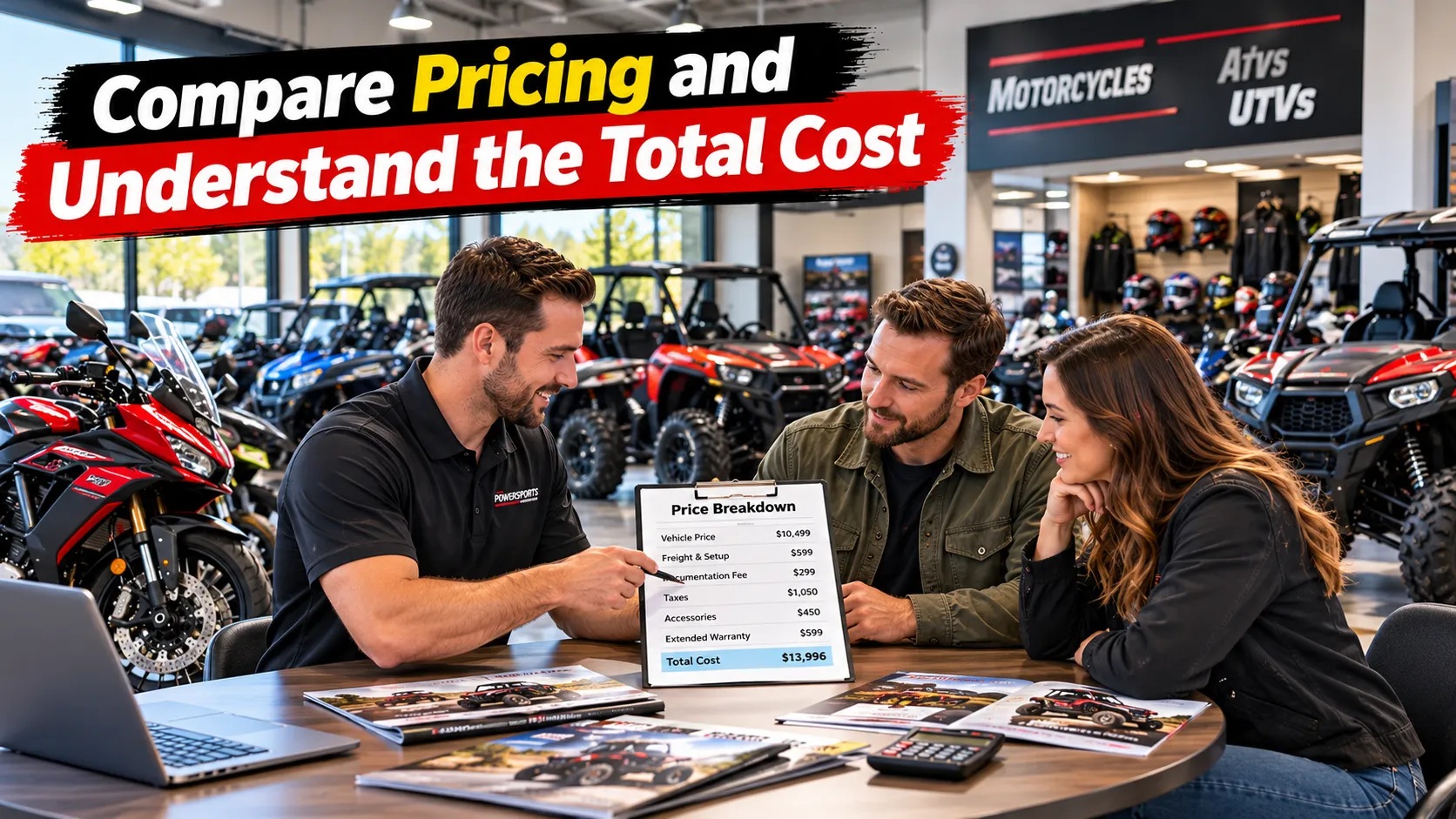
The advertised price is only one part of the overall purchasing cost. Depending on the vehicle and transaction, buyers may also need to account for destination charges, setup fees, documentation charges, taxes, registration, insurance, and optional accessories.
A reliable dealership should clearly explain applicable charges before a purchase is finalized. Comparing the complete out-the-door cost of similar vehicles provides a more accurate picture than comparing advertised prices alone.
It is also important to consider long-term ownership expenses. Fuel, routine servicing, replacement tires, protective gear, storage, and repairs can affect the total cost of owning a motorcycle, ATV, or UTV.
Setting a realistic budget that includes these expenses can help buyers avoid choosing a vehicle that becomes difficult to maintain over time.
4. Check Service and Parts Availability
A vehicle purchase is the beginning of ownership, not the end of the process. Regular maintenance helps preserve performance, identify developing problems, and support dependable operation.
Before choosing a dealership, investigate whether it offers maintenance and repair services appropriate for the vehicle you intend to purchase. Ask about routine service procedures, warranty-related work, parts availability, and the process for scheduling repairs.
Access to compatible replacement parts is another consideration. Some components may need to be ordered, particularly for less common models or specialized equipment. Understanding expected service arrangements can help owners plan ahead.
Buyers should also review the manufacturer’s maintenance schedule and warranty terms. Service requirements differ by model, usage, and operating conditions, so the owner’s manual should remain the primary reference for maintenance intervals.
5. Research Customer Reviews and Dealer Reputation
Online reviews can provide useful insight into a dealership’s communication, purchasing process, service department, and handling of customer concerns. Rather than focusing on a single rating, look for recurring patterns across multiple recent reviews.
For example, repeated comments about clear pricing, knowledgeable staff, timely service, or helpful warranty support may indicate strengths worth investigating. Consistent complaints about unresolved problems or unexpected charges deserve closer attention.
It is equally important to consider how the dealership responds to criticism. Professional, constructive responses may demonstrate a willingness to address concerns, although reviews alone cannot guarantee future service quality.
Recommendations from experienced riders, local powersports communities, and people who own similar vehicles can also help buyers identify dealerships worth evaluating.
6. Review Financing Options and Purchase Terms
Financing may make a vehicle more accessible, but buyers should understand the complete agreement before committing. Important details include the interest rate, loan term, required down payment, monthly installment, and total amount payable over the life of the loan.
A lower monthly payment does not necessarily mean a less expensive purchase if the repayment period is substantially longer. Buyers should also review any applicable fees, credit requirements, and early repayment conditions.
For those considering used motorcycles, ATVs, or UTVs, the vehicle’s condition and maintenance history deserve equal attention. Where appropriate, an independent inspection can help identify mechanical concerns that may not be obvious during a brief viewing.
7. Choose a Dealer That Matches Your Location and Riding Needs
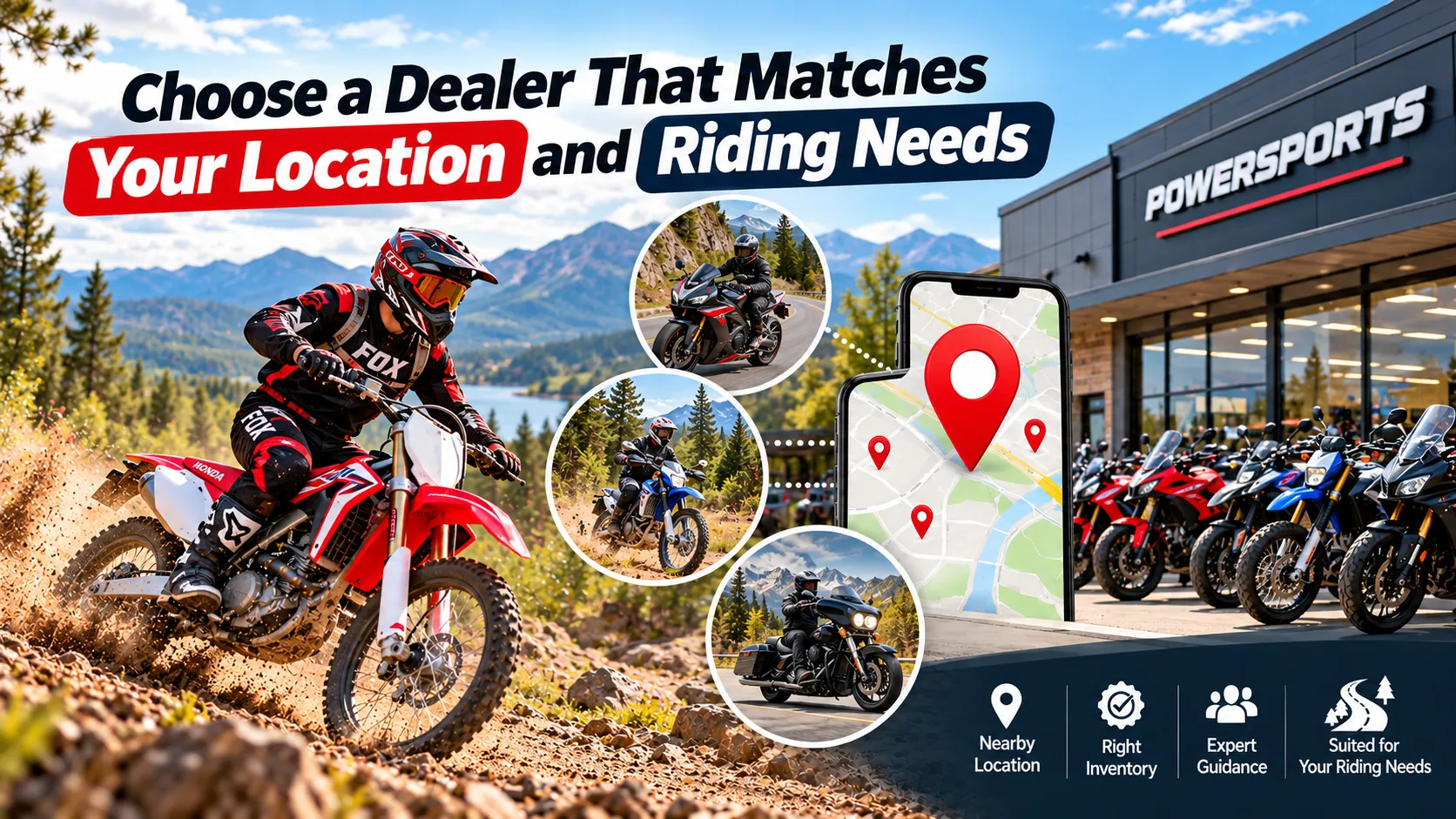
Location can influence convenience, especially when a vehicle requires servicing or warranty-related attention. Buyers may benefit from comparing dealerships within their region and considering travel distance, service availability, and the types of vehicles offered.
For example, people researching options in Central Texas may compare regional businesses such as a powersports dealer in Harker Heights while evaluating their inventory, manufacturer offerings, and ownership support.
The best choice ultimately depends on the buyer’s priorities. Someone purchasing a motorcycle for commuting may value comfort, fuel efficiency, and road-oriented features, while an ATV or UTV owner may prioritize ground clearance, durability, cargo capacity, or off-road capability.
A dealership that understands these different requirements can help buyers make comparisons based on practical needs rather than appearance or specifications alone.
Conclusion
Finding a reliable powersports dealer requires careful research beyond the initial vehicle price. Inventory selection, product knowledge, transparent pricing, service support, customer feedback, and financing terms all contribute to a more informed decision.
By comparing these factors before purchasing, buyers can better understand their options and select a motorcycle, ATV, or UTV that fits their budget, experience level, and intended use. A thoughtful approach to dealership selection also helps establish realistic expectations for maintenance and long-term ownership.
Frequently Asked Questions
1. What should I look for in a reliable powersports dealer?
Look for a suitable vehicle selection, knowledgeable staff, transparent pricing, accessible service support, clear purchase terms, and consistent customer feedback.
2. Is it better to buy a motorcycle, ATV, or UTV from a specialized dealer?
A dealership experienced in powersports vehicles can provide useful product information and may offer relevant parts and service support. The right choice depends on the available inventory and the dealership’s experience with the specific vehicle category.
3. What costs should I consider when buying a powersports vehicle?
Consider the purchase price, applicable taxes and fees, registration, insurance, safety equipment, maintenance, fuel, replacement parts, and optional accessories.
4. Should I check the service department before buying a vehicle?
Yes. Reviewing service capabilities, parts availability, maintenance procedures, and warranty requirements helps you understand what ownership support may be available after the purchase.
5. How can I determine whether a used powersports vehicle is a good purchase?
Review its maintenance records, ownership history where available, overall condition, tires, brakes, suspension, and signs of damage or neglect. An independent mechanical inspection can provide additional confidence before completing the purchase.
Read More: How Does a Dirt Bike Differ From Off-Road and Touring Motorcycles